Mario Bros Museum VR
Projects | | Links:
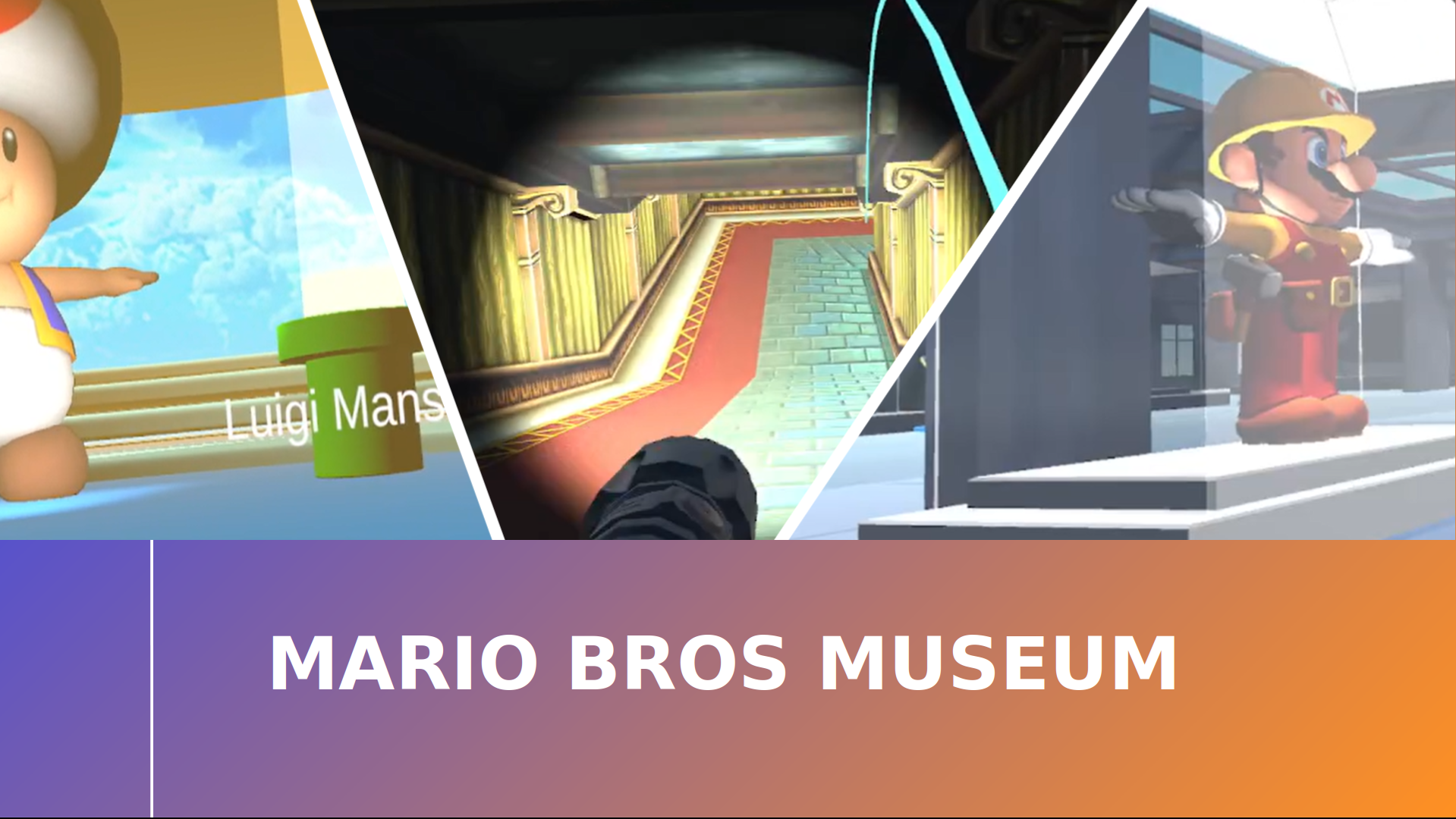
Welcome to the Mario Bros Museum, a 3D virtual reality experience created in Unity. This project allows users to explore a virtual space filled with iconic objects and environments from the Mario universe, reimagined for a first-person immersive perspective.
Introduction and Teamwork
This project was developed as a collaborative group effort with the primary goal of practicing the Scrum methodology in a software development environment. As my first foray into Virtual Reality (VR), it served as a technical challenge to balance creative level design with the performance requirements of VR hardware.
Working in an agile environment, we organized the development into several sprints, utilizing daily stand-ups and retrospective meetings to ensure a cohesive vision. This approach allowed us to iterate quickly on interaction mechanics and environment aesthetics, ensuring that the final museum felt both nostalgic and technologically robust.
Selected Tools
The development of the museum required a specialized stack for VR and project management:
Development Tools
- Unity: The core game engine used for scene assembly, lighting, and physics.
- C#: Used for scripting first-person movement, object interactions, and audio triggers.
- XR Interaction Toolkit: Implemented to handle VR-specific inputs, ensuring compatibility with different headsets.
Museum Design & Features
The museum is structured into several interactive themed rooms, each designed to evoke a specific era or element of the Mario franchise. To maintain immersion and stay true to the source material, users navigate between these rooms through the iconic green pipes, which act as portals.
Luigi’s Mansion Zone
Inspired by the spooky atmosphere of the spin-off series, this area focuses on exploration through darkness. I implemented a dynamic flashlight mechanic that players must use to navigate the room. Within this zone, users can interact with haunted elements and trigger various video screenings that showcase game history and cinematics.
Mario Kart Gallery
This room features a specialized exhibition of legendary karts from the series. It allows players to inspect the 1:1 scale vehicles from a first-person perspective, appreciating the evolution of the designs in a way that is only possible through Virtual Reality.
Main Exhibition Hall
The core of the experience is a hall filled with artifacts from the Mushroom Kingdom. We designed this space to balance visual observation with hands-on interaction. Players can find classic objects like pipes, blocks, and coins; while some are purely for display, many are interactable, triggering iconic animations and sound effects upon touch.
3D Environment and Ambience
I focused on creating a high-fidelity 3D environment that remains faithful to the original source material. We integrated classic objects such as pipes, mystery blocks, and coins, all featuring custom textures and themed lighting to enhance the “museum” atmosphere. The use of spatial audio ensures that as you approach different exhibits, the iconic sounds of the Mushroom Kingdom guide your journey.
VR Interaction
The experience is designed for first-person movement, allowing users to walk through the galleries at their own pace. Key features include:
- Themed Lighting: Dynamic lights that highlight the geometry of 3D models.
- Interactive Exhibits: Objects that respond to the player’s presence or gaze, providing a more engaging experience than a traditional 2D gallery.
Final Result
The project successfully achieved its dual purpose: delivering a high-quality VR experience and demonstrating effective team coordination through Scrum.
Key Outcomes:
- Immersive Exploration: Successfully translated 2D platforming elements into a 3D, first-person VR space.
- Technical Learning: Mastered the basics of VR locomotion and interaction within Unity.
- Agile Proficiency: Delivered a polished product through organized sprints, meeting all the “Definition of Done” criteria established at the start of the project.
This museum stands as a tribute to the Mario universe and a testament to the power of collaborative development in game design.